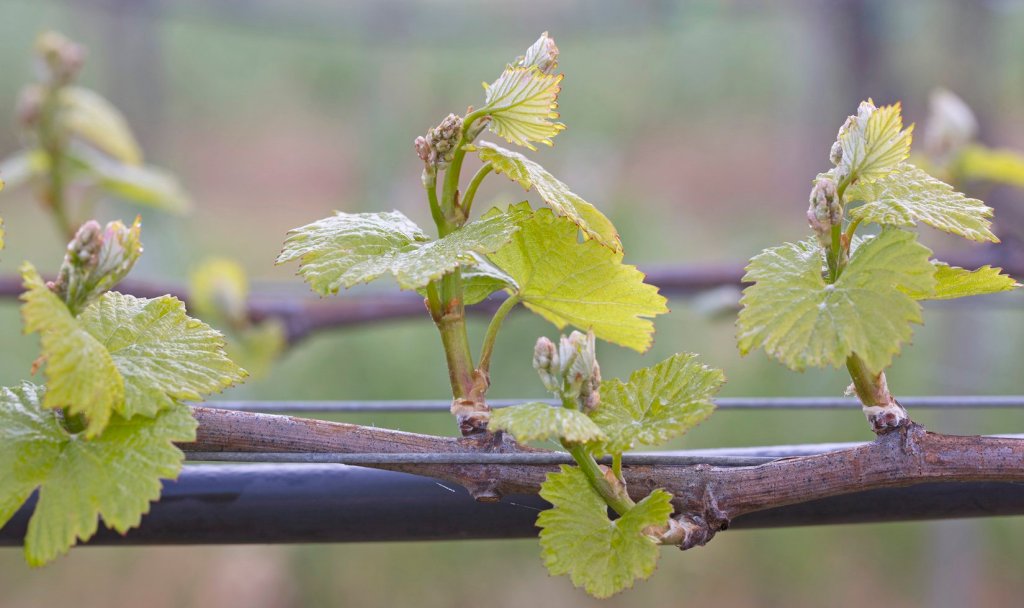
Bud burst is the stage where the new shoots emerge from the buds, as all the genetic coding for the new plant is found within the bud burst. This occurs roughly between March and April in the Northern Hemisphere, and in the Southern Hemisphere this would fall around September and October. Average air temperature will have to be above 10 degrees Celsius in order for the vine to break out of its Dormancy stage.
Compound buds form in the previous growing season and remain dormant over winter. Once the season changes to spring, these buds must burst at a temperature of 10 degrees or higher.
Continentality of the region can affect bud burst. Continentality refers to the degree to which the regions’ climate is influenced by its distance from the Ocean. Inland areas experience greater temperature difference because land heats up quickly in Summer and cools down rapidly in winter. Oceans on the other hand have a moderating effect on coastal climates. Hence, vineyards closer to the seas and oceans have a relatively stable temperature.
In areas with high continentality (greater extreme temperatures) they can have successful and uniform bud burst due to the rapidly rising temperature in the growing season. When we have low continentality, bud bursts can be less synchronised. Cold days can be followed with frosts and this can harm newly burst buds.
In the Northern Hemisphere, certain winters could end up being mild in some places. This can result in temperatures rising enough to potentially lead to early bud burst. Earlier bud bursts mean a longer spring, and this is when temperatures run the risk of falling as low as zero degrees in these places. On some days, these cold temperatures can result in spring frosts that can damage buds and thereby reduce yields.
Higher soil temperatures around the roots can also encourage earlier bud bursts. Drier and well drained soils like sandy soils warm up quickly and also cools quickly too. Clayey rich soils, on the other hand, tend to retain heat and are beneficial for Early Budding Grape varieties (where even below 10 degrees can trigger the bud bursts in some varieties) Chardonnay, Pinot Noir, Merlot and Grenache are some examples of Early Budding varieties. Clayey soils also take longer to cool down. So when an earlier than usual bud burst does occur, clayey soil increases chances to ripen with the retained heat levels in the soil.
On the other hand, late budding varieties require much higher temperatures for the bud bursts to occur hence they are less prone to spring frosts and damage. Example of late budding varieties are Syrah, Cabernet Sauvignon, Sauvignon blanc. Please note that early budding varieties does not imply that they are early ripening. Some early budding varieties like Grenache require long growing seasons in order to ripen adequately.
Winter pruning can affect bud bursts where the lignified canes (that were once the green shoots of the previous year) need to be cut and only desirable buds shall be retained. This typically happens in late winter or just before the new growth begins. This not only shapes up the vine neatly, but also improves air circulation and promotes healthy growth.
 VARUN.WINE