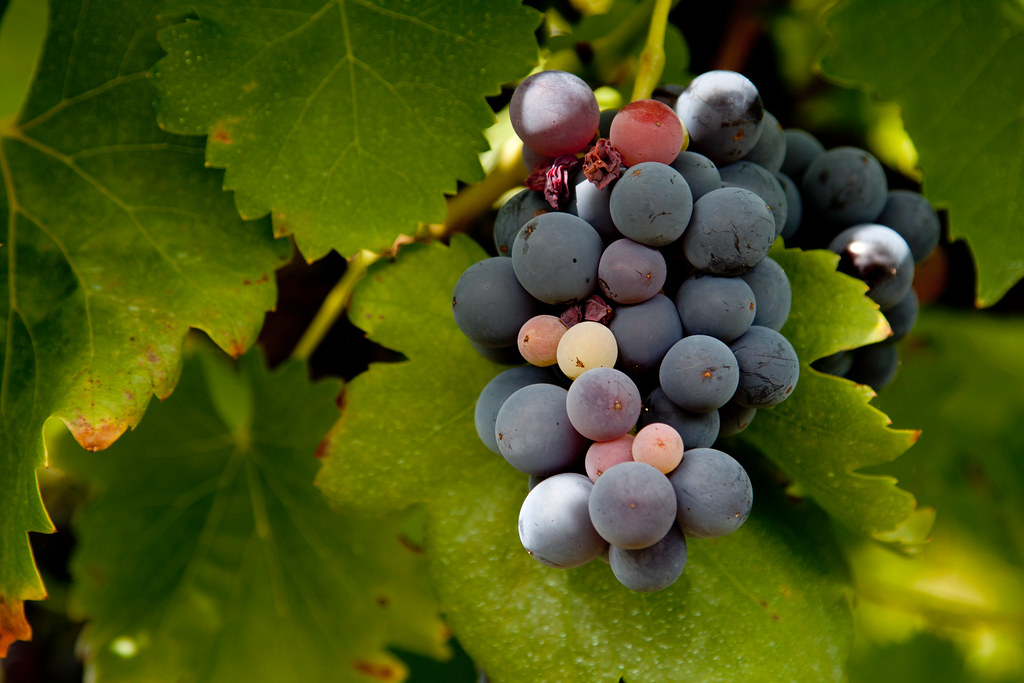
This development phase runs from June through to October in the northern hemisphere and December through to April in the Southern Hemisphere. The shoot growth phase ideally comes to end, so that all the vine efforts are focused primarily on development of the berry and its ripening. Sugar levels increase here, and acidity levels start to drop drastically during the ripening phase. The grape starts to swell up as the water level in the grapes also increases. Tannins start to soften as a result of polymerization after Verizon. Polymerization is a process in which tannin molecules bond together to form larger and complex structures called polymers. This has a significant impact on the taste and stability of wine. Colour and Aroma compounds are increasingly developed during the ripening process.
During the very early berry development phase, there is a cumulation of tartaric and malic acid. Tannin begins to accumulate here as well. Early tannins are astringent and bitter. It is only over time these tannins begin to soften after ‘verizon’. Sugar levels are exceptionally low during the early phase of the grape development. Aroma precursors are developed here.
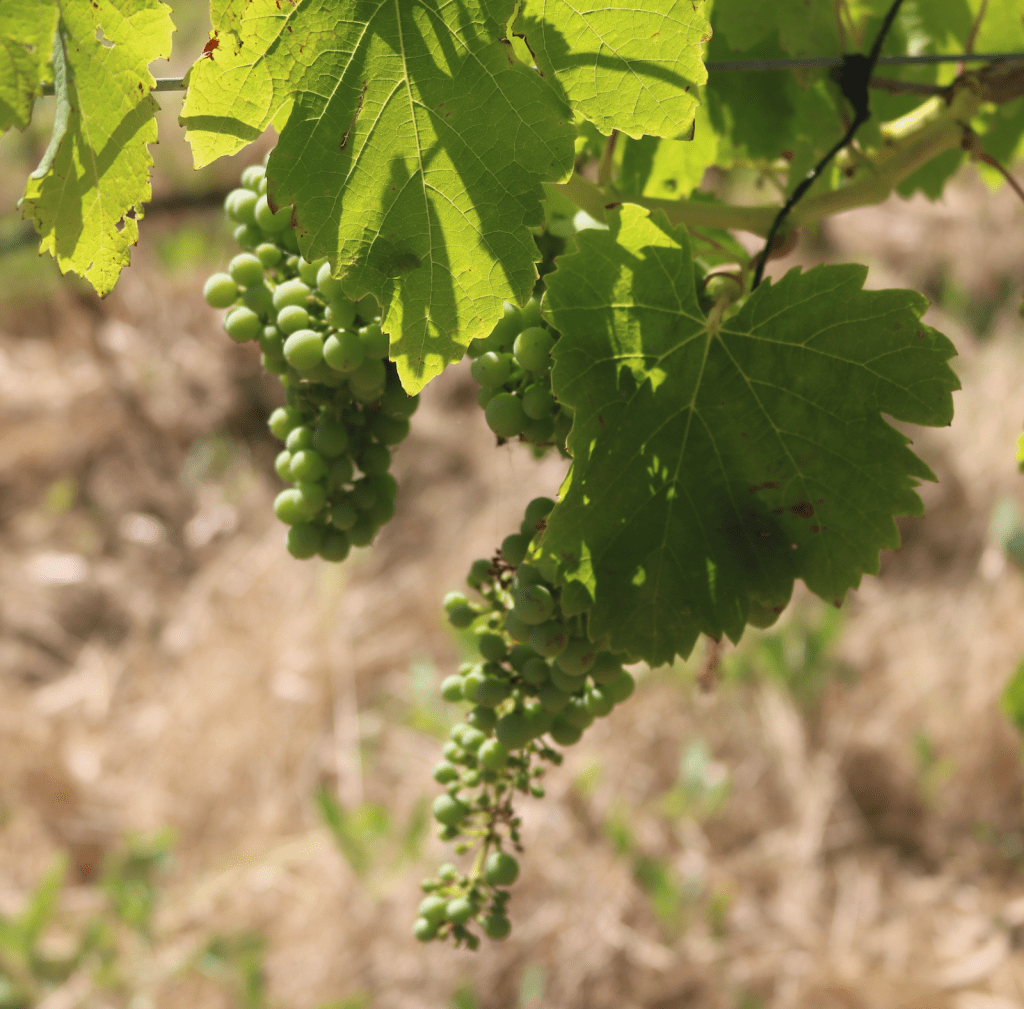
Please note that the Aroma pre-cursors at this stage do not contribute to any aromas. This will only materialise as aromas during the process of fermentations. Example, Methoxypyrazines contribute to herbaceous characteristics, especially to varieties like cabernet sauvignon and Cabernet franc. These pre-cursor compounds will start to decrease post Verizon / pre harvest. Unripe grapes have high amounts of methoxypyrazines.
Verizon phase sees the green coloured grapes change colour to red, blue and black pigmentation as the anthocyanins are produced during this phase. The grape skin softens and sugar level starts to increase, while acidity levels of the grape starts to decrease as the grape ripens.
Mild Hydric Stress Please note that mild water stress can accelerate the process of Grape development. It ultimately leads to the production of ‘smaller berries’ because of less water. This significantly increases the skin to pulp ratio as more skin is beneficial especially in the red wine making as skins contribute to more colour, tannins, and aroma compounds. The grape growers will manage the water accordingly to ensure ‘’Mild Hydric Stress’’.
Grape Ripening – This is the phase that ultimately determines the quality of grapes. Ripening can be defined by, measuring Sugar ripeness as well as measuring the Physiological ripeness. When measuring sugar levels, aromas and flavour ripeness are also measured as a way to assess ripeness. As the grape ripens, aromas will develop from under ripe and herbaceous through to fresh fruit and eventually into riper fruits and rich, sweet and concentrated fruits.
When it comes to assessing physiological ripeness, grape growers look at Tannins and other compounds responsible for flavour, aroma, mouthfeel, and colour. All these components need to reach an optimum level and balance. Unlike sugar ripeness, physiological ripeness involves changes in the polyphenols like tannins and anthocyanins within skins, seeds, and stems. Texture and feel also improves with physiological ripeness as the grape skin becomes more elastic, texture of the pulp improves as well as the seeds in the grape start to lignify.
Grapes grown in warmer regions may reach its optimum sugar levels even before it reaches the desired tannin and aroma ripeness. Hence, the style of wines will result in having higher alcohol levels as a result.
Ultimately, what is considered as optimal ripeness (quality of wine) to harvest is when the combination of sugar, tannin, and aroma ripeness reaches favourable levels where the finished wine is considered as a ‘Balance Wine’. This again depends on the wine style and grape variety that used to make the wines, as well as its climatic conditions.
Adverse conditions that affect Ripening
Cloudy conditions will reduce photosynthesis and as a result low production of sugars. On the other end of the scale, very hot and dry conditions will also cause a reduction in photosynthesis as a result of water stress. Vines will go into reserve mode where sugars will be used to survive and not in the grape.
Excess water can trigger vigour in vines which means a lot of shoot growth and once again the focus is taken away from grape and shoot growth is reactivated. Excess water and dilute the sugars in the grape as the water is taken up through the stem and into the grape. This can eventually lead to grape splitting
In very hot and dry conditions the sugar levels rise rapidly. Sometimes even before the flavours and aromas in the grapes even develop. As a result they have to picked early in order to avoid extremely high levels of sugar. This results in the produced wine becoming high in alcohol content, jammy in nature but lacking well rounded tannins and acidity levels which is vital for the wine’s structure. This is common in hot regions of Argentina where their Malbecs tend to have intense ripe and sweet fruit notes.
Vines can also respire its malic and tartaric acid during the ripening stage, hence a natural decline in acidity level occurs in the grape. However in cooler regions of the world , vines tend to respire acid at a slower levels, hence wines produced from cooler regions tend to retain their acidity. For instance wines from Chablis are known to have higher levels of malic acids.
End of Ripening
Towards the end of ripening if the mean temperature is above 21 degrees, the acid levels will drop rapidly in its final month of ripening which is nearing harvest. As a result, this results in higher PH levels making the grape relatively more alkaline.
On the other hand, if the mean temperature is 15 degrees or below. This can reduce acid loss. Hence lower PH is observed in the must of grapes. Malic acid is retained. Colder night time temperatures also mean less malic is lost during respiration. This is why some warm regions that have cooler nights like Ribera Del Duero in Spain, Central Otago in New Zealand tend to have wines with nice acidity and freshness.
Also as ripening of the grape progresses, Methoxypyrazines (Aroma pre-cursors responsible for green bell pepper, herbaceous notes in wines ) will decrease naturally and Terpenes (Aroma pre-cursors responsible for floral , aromatic notes) will start to increase.
Length of Ripening
There are some grape varieties that ripen earlier than others. Varieties like Chardonnay and Pinot Noir are early budding varieties as well as early ripening. Both Grenache and Cabernet Sauvignon are late ripening varieties, though Grenache tends to be early budding in this instance.
Though sunlight and heat aids in increasing the level of sugars in grapes which in turn means the resultant wine is rich in high alcohol content. Extreme heat waves or many days of hot weather conditions can actually shut down the vine due to stress. Here the vine blocks the sugars to the grapes as it is used for conservation. So the resultant wine this time will be lower in alcohol and less structured. This was evident in Bordeaux in 2003 where there was a heat wave, there was a general dip in the usual quality of wines across Bordeaux that year.
Large yields, excessive shading within the vine canopy can slow down ripening.
Please note grapes can be harvested earlier or later depending on the style of wine desired by the winemaker. Extra ripening is sometimes carried out where the grapes are deliberately left on vines even after it has attained its phenolic maturity. The grape shrivels as it starts to lose its moisture content. Through transpiration there is a decrease in the water content and increase in sugar concentration. Extra ripe aromas like dried fruits are developed here. Shiraz is one grape variety that can give out interesting characteristics with extra ripening.
 VARUN.WINE