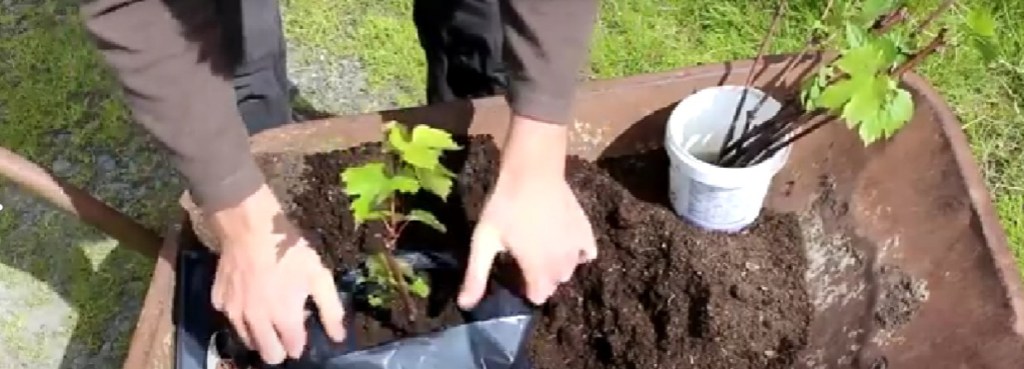
Replacing old, unproductive vines with new ones or starting new vineyards is achieved through the process of propagation. For vines to keep making the same quality of wine and for staying resistant to pests and diseases like before, they need to be propagated with great care and skill. Propagation is, therefore, simultaneously an art and a science.
Not every fruit is the same when it comes to vine varieties. Among them, there are species differences (Vitis vinifera vs. Vitis labrusca). Furthermore, grape varieties are categorised into four botanical categories: crosses, clones, mutations, and hybrids, based on its method of propagation.
Basically, vines can be propagated sexually through cross-fertilisation, as well as asexually through vegetative propagation.
1) Vegetative Propagation: In viticulture (the science of vine growing), cuttings, and layering are the primary methods of propagation, rather than seed dispersal. Vines that grow from seeds reproduce sexually, which means that each offspring gets a mix of genes from both parents. This means that plants grown from seeds are not genetically identical to the parent vine and may even result in a different type of grape. Consequently, vines are seldom propagated from seeds in commercial viticulture due to the difficulty of predicting the characteristics of the resulting plant. Propagation through seeds are more appropriate for breeding new varieties rather than for replicating the existing ones with proven wine qualities. For the precise reproduction of parent vine with precise qualities in the next generation, vegetative propagation methods like cuttings or layering are used. They result in producing genetically identical plants.
A) Cuttings: It is the most common technique used in vineyards. Here a section of the vine shoot is cut, often between two nodes (internodal sectional points) that are planted and allowed to grow as a new plant during spring and summer. The cutting is done after the harvest in the nurseries, just before the bud burst. This takes place during the winter months. The cutting can also be
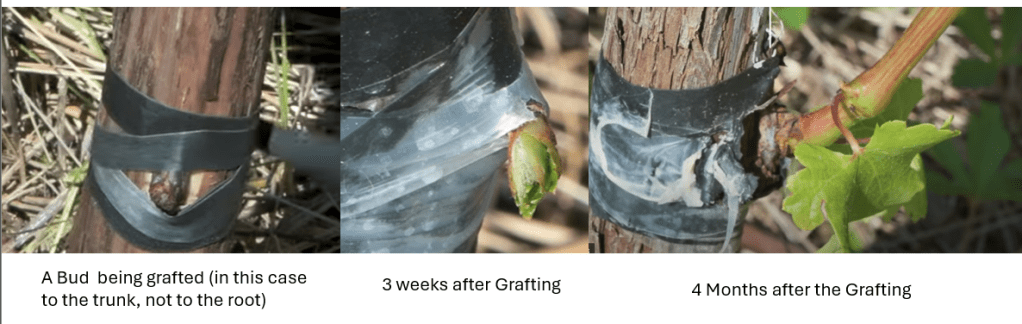
grafted to a desired rootstock and then planted in a nursery. Since nurseries are susceptible to pests and disease outbreaks that can have a major impact on plant health, growth, and marketability, they are heavily regulated these days to ensure the eradication of any diseases.
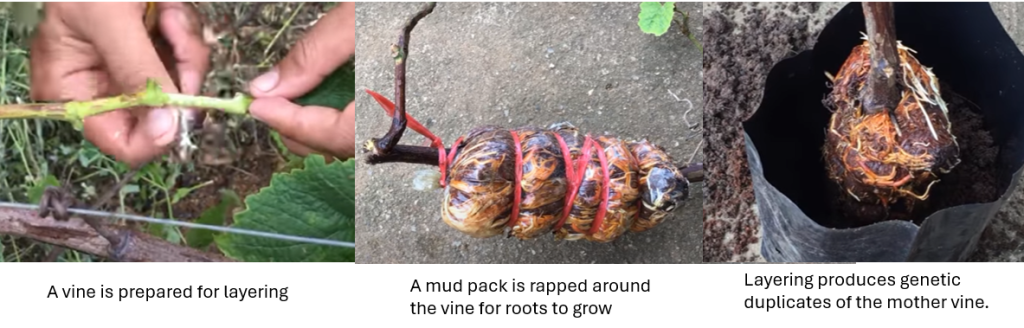
B) Layerings: It is a technique that is used to fill in the gaps that occur as a result of the death of a vine. The cane is bent downward and a portion of it is buried in the soil. The buried section will establish itself in the soil and take root. When the new vine is capable of growing independently without the assistance of the mother vine, the cane may be cut. So the vine will grow on its very own roots instead of with a normal root stock. Because of this, it might not necessarily be as resistant to Phylloxera and might not have the good qualities that a normal root stock would have.
The phylloxera is a small, very harmful aphid like insect that attacks the roots of a vine, (also attacks the leaves sometimes) and kills the plant slowly by stopping the roots from taking in water and nutrients. Some Native American vines from the species Vitis labrusca or Vitis riparia can handle the phylloxera insect without any problems. Accidentally started in Europe in the later half of the nineteenth century from the USA, Phylloxera spread across the world to epidemic proportions, and nearly killed the Wine industry. Once the pest is established in a vineyard, the only control option is to replant the vines grafted to tolerant or resistant rootstocks.
C) Clonal selection:
In the clonal selection, a single vine of exceptional quality is first selected, and all subsequent vines are propagated from cuttings of this singular original vine. This selection process provides significant opportunities to enhance and diversify vine plant material while maintaining the traits and distinctiveness of the grape varieties. This means new vines, produced as a result, are genetically identical to the parent vine. The clonal selection works much similar to the nature of cell division (mitosis) in a plant, where the two daughter cells are identical to the parent cell. These identical progenies in a clonal selection are called, ‘clones’. However, over time, mutations (a process that creates genetic variation by changing DNA sequence) occur in these cuttings, leading to variations within the same variety. This means the vine will change its characteristics. These varieties are called clonal varieties.
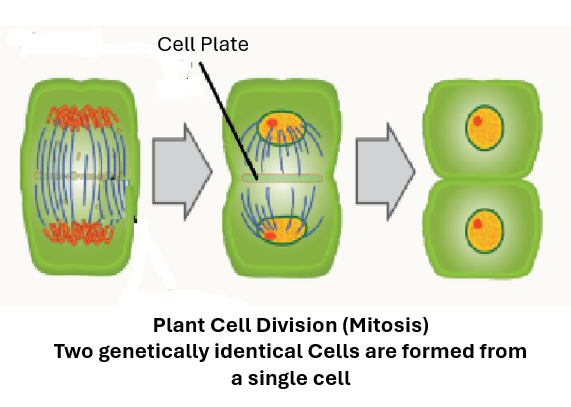
The risk of mutation originates through cell division where the DNA replication process is not always perfect, leading to potential mutations within a population of cells, where not all cells are exact replicas of the original cell. Some mutations may cause more or less disease resistant, smaller vs larger grapes, thinner or thick skins and many other variations. So there will be clonal diversity.
Dijon-115 grapes with small berries, high sugar content, and intense flavours have been produced as a result of cell mutations of Pinot Noir. Dijon 115 is a highly regarded Pinot Noir clone hailing from Burgundy’s University at Dijon, France. Dijon 115 offers a unique combination of early ripening, small berries bursting with intense flavours. Another example of clonal diversity is Pinot Noir’s Dijon 114 that has Burgundian characteristics of lighter red fruits, sophisticated acidity and fruit-driven qualities.
That is why grape growers buy and plant different clones of the same grape variety, as by blending wines from different clones they can create more complex and distinctive wines. Certain grapes can also mutate to other grape varieties. Examples are Pinot Blanc, Pinot Gris, and Pinot Meunier, all of which have mutated from the source Pinot Noir
Before considering clone diversity, growers of grapes will also consider factors like pH levels and water logging. For instance, a site with poorly drained soil would require clones that are more tolerant to waterlogging, while a site with acidic soil might need clones that are more tolerant to low pH.
| A substance’s pH ranges from 0 to 14, which indicates how alkaline or acidic it is. Anything with a pH above 7 is alkaline. Acidity is indicated by a pH value of less than 7. As long as the pH is exactly 7, the substance is neutral. |
Due to these intricacies, a vineyard consultant is typically involved in a clonal selection process.
Mass Selection for Cloning
In Mass Selection, vine growers choose several healthy and most desirable vines that are appropriate for their respective terroirs from their own vineyards. They take cuttings from the selected plants to propagate, aiming to increase the genetic diversity within the vineyard. Cuttings are taken from many different vines, evaluating the health of the vine, yield in terms of volume, quality etc. However, this method can be time-consuming and would turn out to be more costly for larger vineyards. This could be dormant or seasonal cuttings. They are either sent to a nursery or the grape grower does it himself.
Rootstocks and Disease/Pest Resistance
Clones are created by grafting existing grape vines onto different rootstock, mostly for the sake of creating higher-quality fruit or to heighten resistance against disease. Genetically, these plants are identical, as they share the same mother vine (unlike mutations, which inevitably have an entirely different genetic makeup than their parent).
Certain clones of the same grape perform better in different parts of the world; for example, the Gin Gin clone is more commonly planted in Australia’s Margaret River, while the Dijon clone is widely cultivated in California and Oregon. Various clones of the same variety will perform differently in separate parts of the world, as well as yield different levels of quality and amounts of fruit.
2) Cross Fertilisation
New Grape varieties are produced from seeds. Pollen of the Stamen (Male) from one vine is transferred to the stigma of the flower of another vine. This is called cross-fertilisation. Grapes are then developed from those flowers and the seeds from within those grapes are used for production. The new vines that grow from these seeds have all different characteristics. It must be noted that the vines that are grown through seeds are not genetically identical to parent plants.
‘Crossings’ are fertilisations from two members of the same species; for example, two Vitis vinifera plants can be crossed. A marriage between an Asian man and a European woman (or vice versa) can be used to illustrate the concept of crossing, where both are Homo sapiens, but with different individual features. The offspring will have a mixture of both parental features.
Crosses constitute the vast majority of wine grapes grown worldwide. This means that two varieties from the same vine species, for example,Vitis vinifera or Vitis labrusca are ‘crossed’ to create an entirely new variety. This occurs when pollen from one plant fertilises the flower of another. Cross-pollination may occur naturally or as a result of human activity. When wild Crossings take place, where fertilisation is without intentional human activity, their results may not be necessarily beneficial from the perspective of commercial vineyards.
Cabernet Sauvignon (green pepper, mint), the result of crossing Cabernet Franc (with Herbaceous Notes) and Sauvignon Blanc (bell pepper from Pyrazine), is a well-known example of a cross variety. In 1925, crossing by hand made Pinotage, a wine that is a cross between Pinot Noir (having a desired level of acidity and fruitiness) and Cinsault (high yielding and resistant to drought). When Riesling, which tastes fruity and acidic, and Madeleine Royale, which has higher yields, are crossed, the result is Muller-Thurgau (Swiss), which has traits of both.
Mutations are different from natural variations. A grape mutation is the result of a variety’s response to environmental challenges, which are typically intended to safeguard the plant from factors such as frost, rot, or other potential threats.
Pinot Noir mutations to Pinot Gris and Pinot Blanc are two well-known examples of grape mutations. The mutated varieties emerged as a result of the DNA chains in these varieties adapting and avoiding the sequence that gives the fruit its pigmented skin.
A vine variety is officially defined as a mutation when a handful of its genetic characteristics are no longer identical to the parent vine.
Hybrids, on the other hand, are the products of fertilisation between two different species. A popular example is the “labradoodle”, which is a crossbreed dog created by crossing a Labrador Retriever and a Standard Poodle. Similar to crosses, hybrid varieties are produced via the same process; however, unlike crosses, hybrids are the result of the crossing of two different species (think one Vitis vinifera variety and one Vitis labrusca variety).
Although frequently looked down upon in the past, hybrids are becoming more and more popular around the globe, as they have a high tolerance to fungal diseases, phylloxera, and powdery mildew.
Ugni Blanc (widely grown in South West of France, but originally from Italy, where it is called Trebbiano) is Vitis vinifera, when crossed with Rayon d’or (North American vine which is Vitis interspecific) giving rise to Vidal BlANC (Ice Wine). Species which are NOT Vitis vinifera are resistant to diseases (mildew) and pests (phylloxra). Careful human initiated fertilisations bring about desirable characteristics in the offsprings. Three other popular examples of hybrid varieties are Seyval Blanc, Traminette and Cayuga.
Comparison Summary
| Clones | Crosses | Mutations | Hybrids | |
| Methodology | Human intervention by grafting existing grape vines onto different rootstock. Clones are created through vegetative propagation. | Pollination between two varieties of the same vine species variety. This can happen naturally or through intentional human activity. | Nature’s decision to bring about changes in the vine’s DNA sequences | Pollination of two different species (Example: the Vitis vinifera variety is cross-pollinated with the Vitis labrusca variety for resistance to Phylloxera pest). Hybrids happen through intentional human activity or through natural pollination |
| Purpose | For creating higher-quality fruit or to heighten resistance against pests and diseases. | Humans do it to produce a new variety with beneficial traits inherited from both parent vines. But achieving this can be challenging, expensive and time-consuming | Plant’s own response to various aggressive environmental hazards to protect itself against. | Humans do it to produce a new variety with beneficial traits inherited from both parent vines. But achieving this can be challenging, expensive and time-consuming |
| Genetic Composition | Genetic characteristics are Identical to mother | At least some genetic characteristics are NOT identical to the to mother | At least some genetic characteristics are NOT identical to the to mother | Totally mixed genetic inheritance |
 VARUN.WINE